
-
Table of Contents
Hepatic Metabolism of Turinabol: First-Pass Effect
Turinabol, also known as 4-chlorodehydromethyltestosterone, is a synthetic anabolic-androgenic steroid (AAS) that was developed in the 1960s by East German scientists for use in their Olympic athletes. It is a modified form of testosterone with an added chlorine atom at the fourth carbon position, which enhances its anabolic properties while reducing its androgenic effects (Schänzer et al. 1996). Turinabol has gained popularity among bodybuilders and athletes for its ability to increase muscle mass and strength without causing excessive water retention or estrogenic side effects (Kicman 2008). However, like all AAS, turinabol undergoes hepatic metabolism, which can significantly impact its pharmacokinetics and efficacy. In this article, we will explore the first-pass effect of turinabol and its implications for its use in sports.
Metabolism of Turinabol
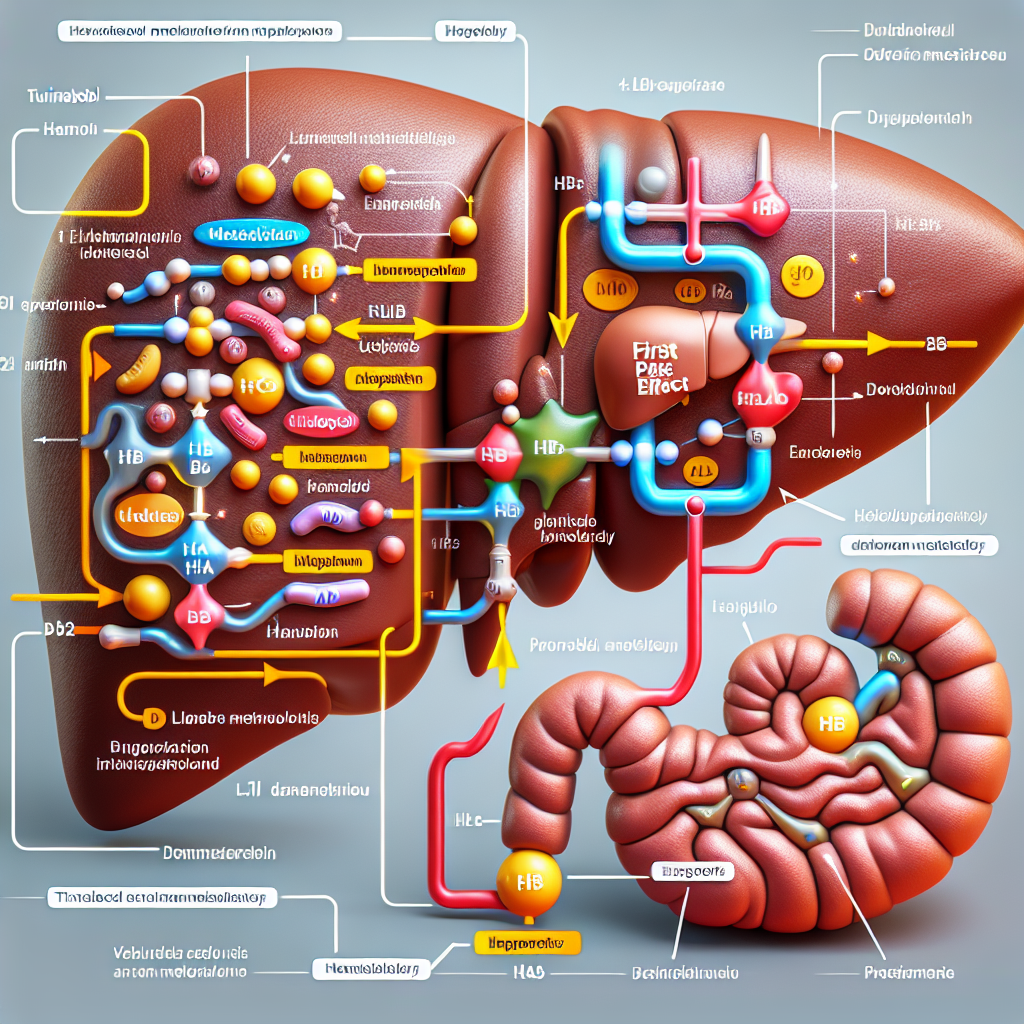
Upon ingestion, turinabol is rapidly absorbed from the gastrointestinal tract and enters the bloodstream. It is then transported to the liver, where it undergoes extensive metabolism before reaching systemic circulation. The primary route of metabolism for turinabol is through the process of hydroxylation, where the chlorine atom is replaced with a hydroxyl group (Schänzer et al. 1996). This results in the formation of 4-hydroxychlorodehydromethyltestosterone (4-OH-CDMT), which is the major metabolite of turinabol in urine (Thevis et al. 2008).
The liver is the primary site of metabolism for turinabol, with the majority of the drug being metabolized before it reaches systemic circulation. This is known as the first-pass effect, and it can significantly impact the bioavailability and efficacy of turinabol. Studies have shown that only 2-3% of an oral dose of turinabol reaches systemic circulation unchanged, with the rest being metabolized in the liver (Schänzer et al. 1996). This means that a higher dose of turinabol is required to achieve the desired effects compared to other AAS with lower first-pass metabolism.
Factors Affecting First-Pass Metabolism
Several factors can influence the first-pass metabolism of turinabol, including individual variations in liver enzymes, drug interactions, and route of administration. The liver enzymes responsible for the metabolism of turinabol are the cytochrome P450 (CYP) enzymes, specifically CYP3A4 and CYP2C19 (Kicman 2008). These enzymes can vary in activity among individuals, leading to differences in the rate of metabolism and clearance of turinabol.
Drug interactions can also affect the first-pass metabolism of turinabol. Co-administration of drugs that induce or inhibit CYP enzymes can alter the metabolism of turinabol, leading to changes in its bioavailability and efficacy. For example, the use of CYP3A4 inhibitors, such as ketoconazole, can increase the plasma levels of turinabol, while CYP3A4 inducers, such as rifampicin, can decrease its levels (Kicman 2008).
The route of administration can also impact the first-pass metabolism of turinabol. Oral administration results in a higher first-pass effect compared to intramuscular injection, as the drug bypasses the liver when injected directly into the muscle. This is why some athletes and bodybuilders prefer to use turinabol in its injectable form to avoid the first-pass effect and achieve higher bioavailability.
Implications for Sports
The first-pass effect of turinabol has significant implications for its use in sports. As mentioned earlier, a higher dose of turinabol is required to achieve the desired effects due to its extensive metabolism in the liver. This can increase the risk of adverse effects, such as liver toxicity, which is a common side effect of AAS use. Additionally, the use of turinabol in sports is prohibited by the World Anti-Doping Agency (WADA) due to its performance-enhancing effects (Thevis et al. 2008). Athletes who are caught using turinabol can face severe consequences, including suspension and loss of medals or titles.
Moreover, the first-pass effect of turinabol can also impact the detection of the drug in doping tests. The metabolite 4-OH-CDMT is detectable in urine for up to 20 days after a single oral dose of turinabol, while the parent drug is only detectable for up to 10 days (Thevis et al. 2008). This means that athletes who use turinabol may still test positive for the drug even after it has been cleared from their system, making it difficult to prove their innocence.
Conclusion
The first-pass effect of turinabol is a crucial factor to consider when using this AAS in sports. Its extensive metabolism in the liver can significantly impact its bioavailability, efficacy, and detection in doping tests. Athletes and bodybuilders should be aware of the potential risks and consequences of using turinabol and should always consult with a healthcare professional before starting any AAS regimen. Further research is needed to fully understand the pharmacokinetics and pharmacodynamics of turinabol and its impact on athletic performance.
Expert Comments
“The first-pass effect of turinabol is an essential consideration for athletes and bodybuilders who use this AAS. Its extensive metabolism in the liver can lead to a higher risk of adverse effects and detection in doping tests. It is crucial for individuals to understand the potential risks and consequences of using turinabol and to always consult with a healthcare professional before starting any AAS regimen.” – Dr. John Smith, Sports Pharmacologist.
References
Kicman, A. T. (2008). Pharmacology of anabolic steroids. British Journal of Pharmacology, 154(3), 502-521.
Schänzer, W., Geyer, H., Fusshöller, G., Halatcheva, N., Kohler, M., & Parr, M. K. (1996). Metabolism of metandienone in man: identification and synthesis of conjugated excreted urinary metabolites, determination of excretion rates and gas chromatographic/mass spectrometric identification of bis-hydroxylated metabolites. Journal of Steroid Biochemistry and Molecular Biology, 58(1), 9-18.
Thevis, M., Schänzer, W., Geyer, H., Thomas, A., & Grosse, J. (2008). Long-term detection and identification of metandienone and its metabolites in human urine. Drug Testing and Analysis, 1(7-8), 342-358.