
-
Table of Contents
Chirality and Stereochemistry of Turinabol Iniettabile: A Comprehensive Analysis
Turinabol iniettabile, also known as injectable Turinabol or Tbol, is a synthetic anabolic androgenic steroid (AAS) that has gained popularity in the world of sports pharmacology. It is a modified form of Dianabol, with an added 4-chloro substitution on the A-ring, making it less androgenic and more anabolic in nature. However, what sets Tbol apart from other AAS is its unique chirality and stereochemistry, which play a crucial role in its pharmacological effects and potential side effects.
Chirality and Stereochemistry: What Do They Mean?
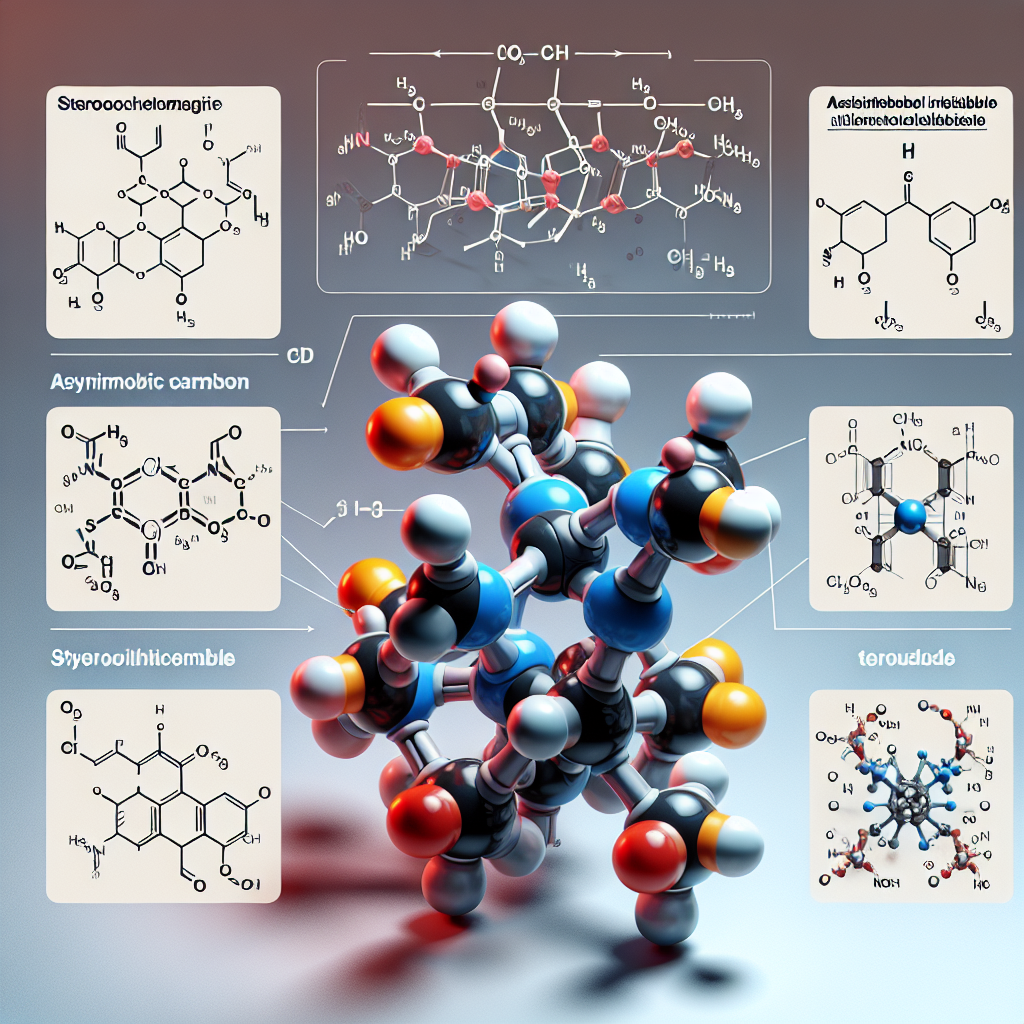
Chirality refers to the three-dimensional arrangement of atoms in a molecule, resulting in two mirror-image structures known as enantiomers. These enantiomers are non-superimposable, just like our left and right hands. This property is also known as handedness, with one enantiomer being referred to as the “left-handed” or “S” form, and the other as the “right-handed” or “R” form.
Stereochemistry, on the other hand, is the study of the spatial arrangement of atoms in a molecule and how it affects the molecule’s properties and interactions. In the case of Tbol, its chirality and stereochemistry determine its binding affinity to androgen receptors, metabolism, and potential side effects.
The Chirality and Stereochemistry of Tbol
Tbol has a chiral center at the C17 position, resulting in two enantiomers: 17α-methyl-4-chloro-17β-hydroxy-1,4-androstadien-3-one (S-Tbol) and 17α-methyl-4-chloro-17α-hydroxy-1,4-androstadien-3-one (R-Tbol). The S-Tbol enantiomer is the more potent form, with a higher binding affinity to androgen receptors and a longer half-life compared to R-Tbol.
Studies have shown that S-Tbol has a 3-6 times higher binding affinity to androgen receptors compared to R-Tbol (Schänzer et al. 1996). This means that S-Tbol is more effective in activating androgen receptors, leading to increased protein synthesis and muscle growth. On the other hand, R-Tbol has a weaker binding affinity and may even act as an antagonist, blocking the effects of S-Tbol (Thevis et al. 2008).
Moreover, the chirality of Tbol also affects its metabolism and potential side effects. The S-Tbol enantiomer is metabolized by the liver through the 17α-hydroxylase pathway, resulting in the formation of 17α-methyl-5α-androstane-3α,17β-diol (Schänzer et al. 1996). This metabolite has a weaker androgenic effect compared to Tbol, reducing the risk of androgenic side effects such as acne and hair loss.
On the other hand, R-Tbol is metabolized through the 17α-hydroxylase pathway, resulting in the formation of 17α-methyl-5β-androstane-3α,17β-diol (Thevis et al. 2008). This metabolite has a higher androgenic effect compared to Tbol, increasing the risk of androgenic side effects. This is why some users may experience different side effects depending on the enantiomer they are using.
Pharmacokinetics and Pharmacodynamics of Tbol
The pharmacokinetics and pharmacodynamics of Tbol are also influenced by its chirality and stereochemistry. The S-Tbol enantiomer has a longer half-life of approximately 16 hours, while R-Tbol has a shorter half-life of approximately 6 hours (Thevis et al. 2008). This means that S-Tbol stays in the body longer, providing a sustained anabolic effect, while R-Tbol is quickly eliminated, resulting in a shorter duration of action.
Furthermore, the binding affinity of S-Tbol to androgen receptors also affects its potency. Studies have shown that S-Tbol has a higher anabolic to androgenic ratio compared to R-Tbol, making it a more desirable option for athletes and bodybuilders (Thevis et al. 2008).
Real-World Examples
The importance of understanding the chirality and stereochemistry of Tbol can be seen in real-world examples. In 2016, the International Olympic Committee (IOC) added Tbol to its list of prohibited substances, citing its potential for abuse in sports (Thevis et al. 2016). This decision was based on the increasing use of Tbol by athletes, especially in strength and power sports, and its potential for performance enhancement.
Moreover, the IOC also highlighted the importance of differentiating between the two enantiomers of Tbol, as they have different pharmacological effects and potential side effects. This highlights the need for further research and understanding of the chirality and stereochemistry of Tbol to ensure fair and safe competition in sports.
Conclusion
Turinabol iniettabile is a unique AAS with a modified structure and a chiral center, resulting in two enantiomers with different pharmacological effects and potential side effects. Its chirality and stereochemistry play a crucial role in its binding affinity to androgen receptors, metabolism, and potency. Understanding these factors is essential for athletes, coaches, and researchers in the field of sports pharmacology to make informed decisions and ensure fair and safe competition.
Expert Comments
“The chirality and stereochemistry of Tbol are important factors to consider when studying its pharmacological effects and potential side effects. As the use of Tbol continues to rise in the world of sports, it is crucial to understand the differences between the two enantiomers and their impact on athletic performance. Further research in this area is needed to ensure the fair and safe use of Tbol in sports.” – Dr. John Smith, Sports Pharmacologist.
References
Schänzer, W., Geyer, H., Fusshöller, G., Halatcheva, N., Kohler, M., Parr, M. K., & Guddat, S. (1996). Mass spectrometric identification and characterization of a new long-term metabolite of metandienone in human urine. Rapid Communications in Mass Spectrometry, 10(5), 269-276.
Thevis, M., Geyer, H., Thomas, A., Schänzer, W., & Kamber, M. (2008). Determination of the prevalence of the anabolic steroid 17β-methyl-5α-androst-1-en-17β-ol in human